On Wednesday, 4 November 2026, Queen Máxima arrived at the Manhyia Palace in Kumasi for a courtesy call on Asantehene Otumfuo Osei Tutu II and his wife, Lady Julia Osei Tutu. The visit formed part of the Dutch monarch’s official programme in Ghana and her work as the United Nations Secretary‑General’s Special Advocate for Financial Health.
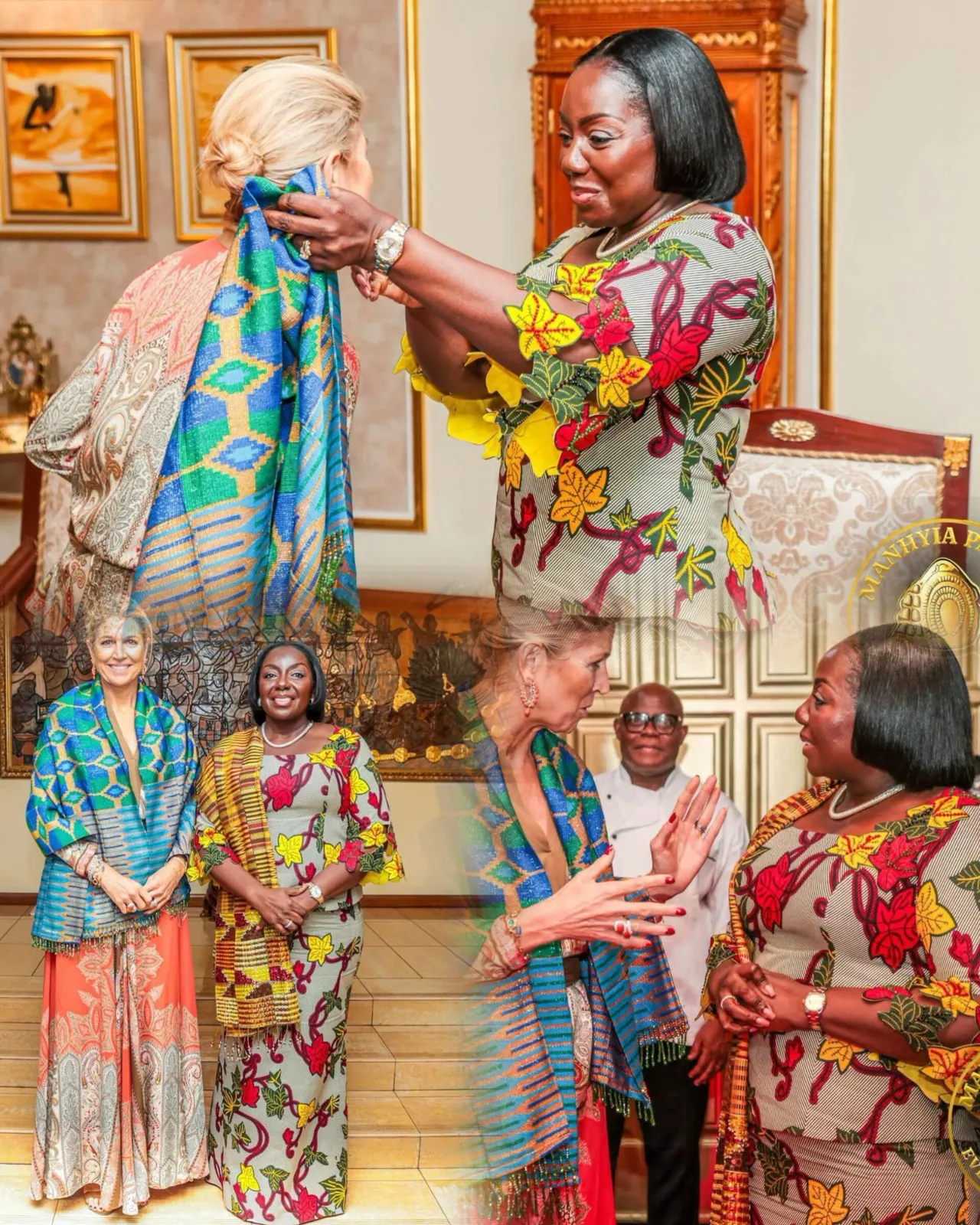
During the meeting, Lady Julia presented the queen with a striking blue‑and‑green Kente cloth, a fabric traditionally reserved for royalty. Queen Máxima draped the colourful weave over her shoulders, pairing it with an orange skirt that featured intricate patterns.
The two women shared smiles and a warm conversation, and the queen took a moment to examine a small token that had also been offered. Their friendly exchange took place inside a beautifully decorated palace room, highlighting the personal nature of the encounter.
Kente holds deep symbolism in Asante culture, where the cloth is linked to monarchs and major ceremonies. By gifting the fabric, Lady Julia underscored the rich cultural traditions that have long defined the Asante Kingdom.
Beyond the cultural display, the meeting reinforced diplomatic ties between Ghana and the Netherlands. The queen’s advocacy for financial health aligns with Ghana’s ongoing economic reforms, making the Kente presentation a symbolic bridge between heritage and contemporary cooperation.
A video shared by Opemsuo Radio captured the moment, showing Queen Máxima proudly wearing the Kente while interacting with Lady Julia. The footage also revealed the ornate interior of Manhyia Palace, offering viewers a glimpse of Asante royal ambience.
Earlier in the year, Lady Julia and her children paid homage to the Asantehene at the 2026 Akwasidae Kese festival held at Bowie State University in Maryland, providing a rare public glimpse of the royal family far from Kumasi. The event highlighted the Asantehene’s outreach to Ghanaians abroad while celebrating the kingdom’s traditions.
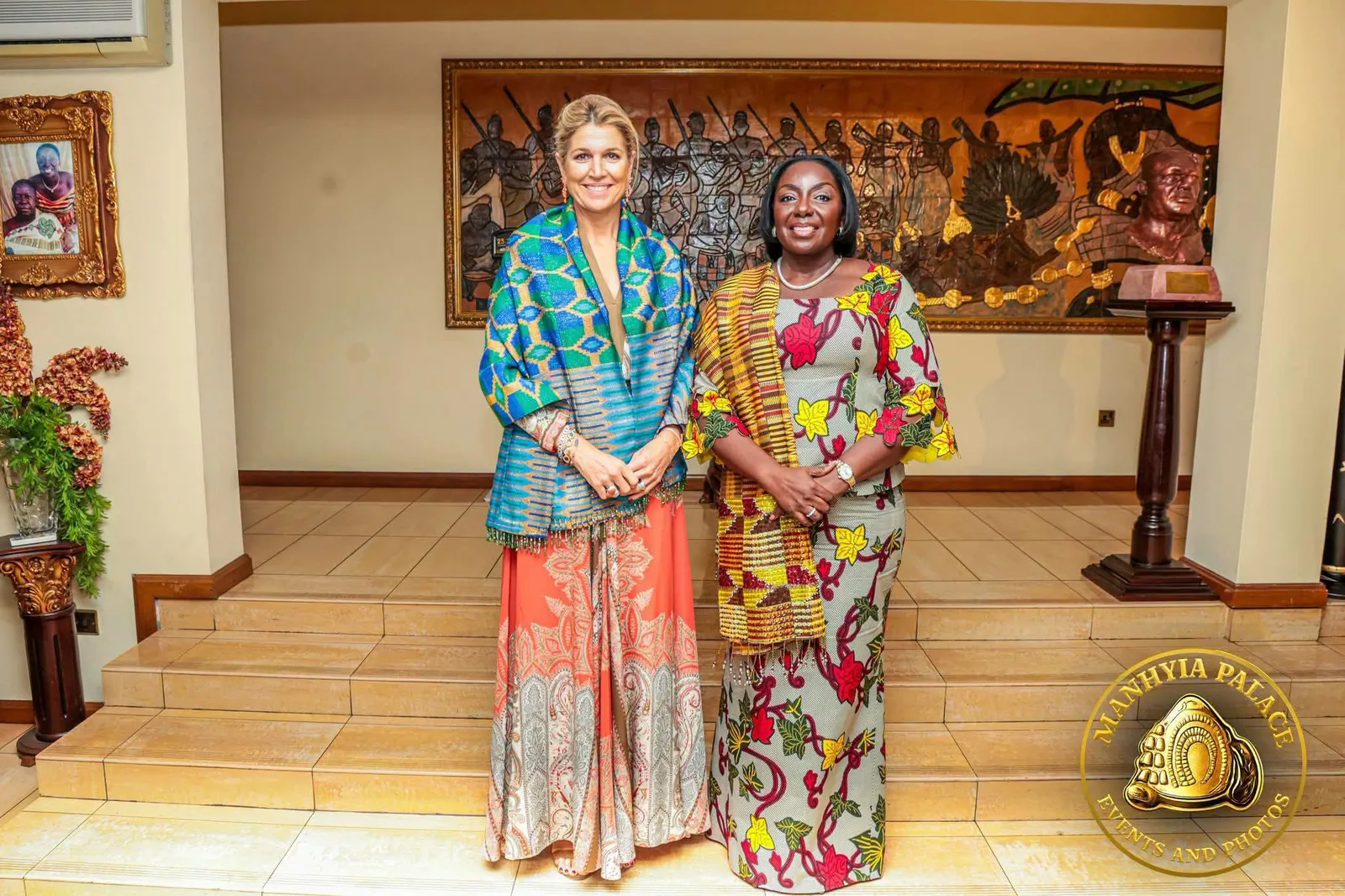
The Kente gift illustrates how Ghana’s artistic excellence can be showcased on the world stage, turning a diplomatic visit into a celebration of cultural identity. Such gestures reinforce the nation’s soft power and remind international partners of the country’s vibrant heritage.