
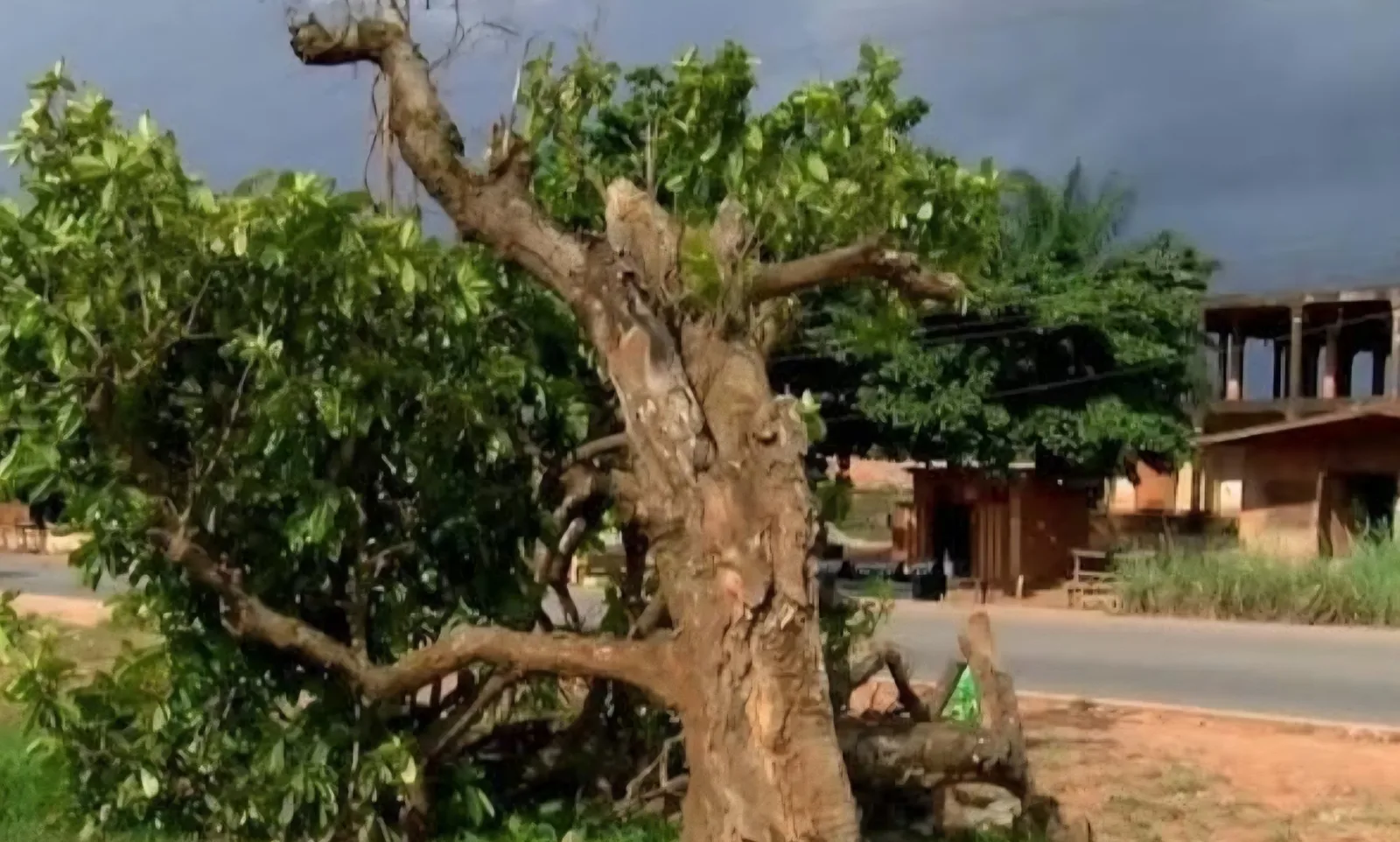
Okomfo Anokye, the 17th‑century Asante priest who helped found the Asante Kingdom and conjured the Golden Stool, is remembered through five historic trees scattered across the Ashanti Region. Two of those living landmarks have recently disappeared – one felled by unknown hands and another toppled by a sudden gale – reigniting worries about the protection of Ghana’s cultural heritage.
Oral tradition records that Anokye planted three seedlings of the Kumnini tree at Kwaman (now Kumasi), Dwaben and Kumawu. The Kwaman tree survived and became a symbol of the capital’s identity, while the seedlings at Dwaben and Kumawu are said to have failed to take root. This trio forms the oldest documented strand of the priest’s arboreal legacy.
Feyiase cola tree cut down
Local lore says the historic cola tree at Feyiase sprang after Anokye spat a cola nut while passing through the village, and the tree was believed to be more than 300 years old. The tree was cut down by unknown persons in November 2023, prompting involvement from the Feyiase Akoyem Traditional Council and police. The loss was widely reported across the region as a blow to both cultural memory and traditional medicine.
Community elders described the cutting as a deliberate act of vandalism that threatened the spiritual protection the tree symbolised. Calls for stricter safeguarding of historic sites have grown louder ever since, with local authorities pledging investigations.
The fifth tree, known as the Onton tree in Asante Agona, is said to have been planted by Okomfo Anokye around 1690, serving as a powerful spiritual emblem for the Asante Kingdom. Both Yen.com.gh and Graphic Online note that historians estimate the tree’s age at roughly 330‑336 years. Its towering presence had long been a pilgrimage point for those seeking a tangible link to the priest’s legacy.
Onton tree toppled by winds
On Tuesday, 3 November 2026, strong winds ripped the Onton tree from the ground, leaving it upside down with roots pointing skyward and branches lying on the earth, as shown in videos shared on social media. Police were alerted, but the natural force left the historic trunk shattered beyond repair.
Many locals interpreted the inverted fall as a “spiritual sign,” echoing the tree’s historic role as a conduit between the earthly and the divine. The sentiment, has sparked renewed dialogue about the metaphysical meaning of the loss.
The simultaneous disappearance of the Feyiase cola tree and the Onton tree has sharpened public focus on the vulnerability of Ghana’s sacred landmarks. Cultural custodians, including the Asantehene’s development projects, are now urging the government to enact stronger heritage‑preservation statutes. As the ash of these ancient trunks settles, the call to protect the living memory of Okomfo Anokye grows ever more urgent.