
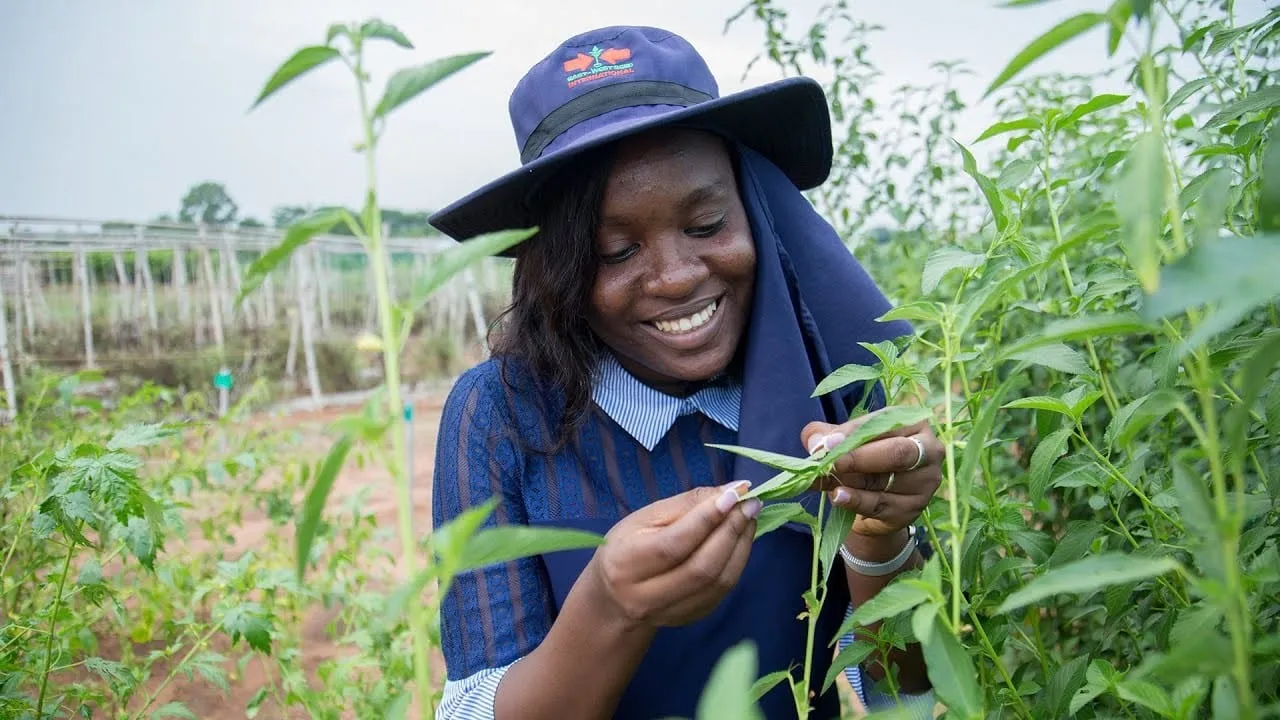
The leafy vegetables that fill soup pots across West Africa have just earned one of agriculture's top international honours.
Plant scientist Pamela Afokpe, R&D Operations Manager at East-West Seed West Africa, received the 2026 Norman Borlaug Award for Field Research and Application at the World Food Prize Foundation in Des Moines, Iowa, West African AgriBusiness reported.
Endowed by the Rockefeller Foundation, the award recognises outstanding on-the-ground scientific work by people under 40. Afokpe was honoured for turning African indigenous vegetables, long overlooked by the formal seed industry, into commercial opportunities for smallholder farmers.
She accepted the award on the same stage where her late mentor, East-West Seed founder Simon N. Groot, received the World Food Prize in 2019.
From a rented field
Working from East-West Seed's research hub on the International Institute of Tropical Agriculture campus in Benin, Afokpe started in 2017 with a rented field and manual irrigation. She went on to collect more than 2,000 crop samples from across West Africa.
Her focus crops include gboma (African eggplant), amaranth and jute mallow. Her best-known breakthrough, the Sika gboma variety, brought intermediate tolerance to bacterial wilt, a disease that has historically wiped out entire fields, along with longer shelf life.
Proving it in the market
Afokpe also worked on the business side. She replaced seed broadcasting with careful nursery management, cutting farmers' input costs by 40 per cent, and ran open-air shelf-life demonstrations with market women to show that less spoilage meant better daily margins. Demand grew so strong that retailers began booking harvests on farmers' plots before planting was done.
Sika has since reached tens of thousands of smallholder farmers and women retailers across West and Central Africa. According to the World Food Prize Foundation, Afokpe works with farmers and partners in eight countries, Ghana among them.
"African indigenous vegetables belong at the center of the global food security map," Afokpe said in her acceptance remarks. "By bringing rigorous science to the crops our grandmothers grew, we are proving that smallholder farmers and market women can drive viable, commercial value chains when given access to quality seed genetics."
For Ghanaian growers and traders of local greens, her win is a reminder that home-grown crops can be serious business.