Ghana's Minister for Tourism, Culture and Creative Arts, Abla Dzifa Gomashie, wants a royalty system that pays creatives whenever their work is used, not just when it first comes out.
In an interview with Pulse Ghana published on Tuesday, October 27, the minister said her ministry is working with the World Intellectual Property Organization (WIPO) to strengthen local copyright institutions so they can protect artists more effectively.
"Creatives need their works protected," she said.
The Akrobeto example
To make her point, Gomashie turned to one of the most recognisable sounds in Ghanaian pop culture: comedian and actor Akrobeto's laugh. It turns up everywhere, she noted, yet the man behind it is not paid for that use.
"Akrobeto, for example, should be earning a lot of money for his laughter that we all use. We use it, but we don't pay him anything," she said.
The minister argued that the gap becomes painful as entertainers age and stop working actively. When veterans struggle to pay for healthcare or basic living costs while their old work keeps circulating, she asked, "Why are you surprised?"
She compared the ideal system to book publishing, where an author can keep earning each time a title is reprinted or released in a new edition.
Fixing the institutions
Gomashie said the WIPO partnership targets not only creatives but also the bodies responsible for administering their rights, which must be properly equipped for copyright law to work in practice. She added that WIPO chose Accra to host its first African conference.
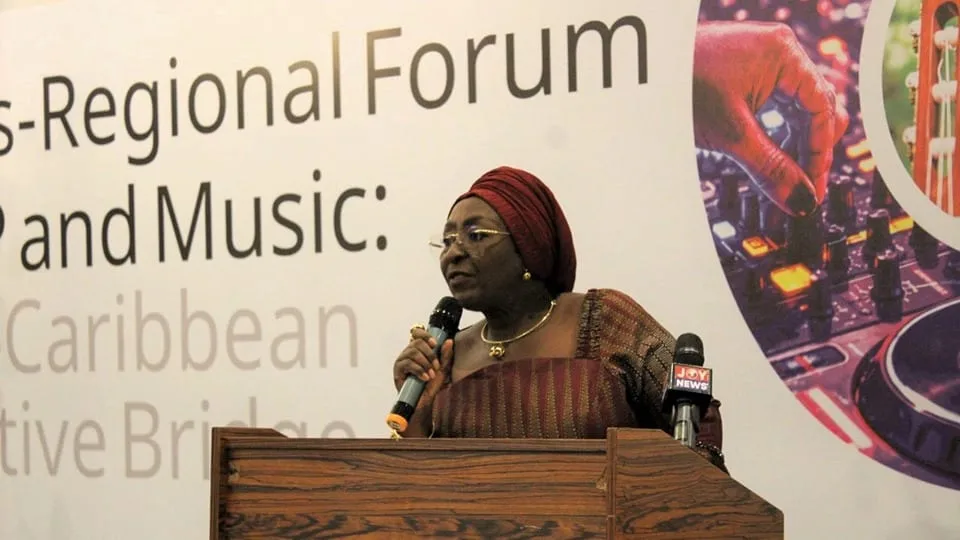
That collaboration was on show in September, when WIPO, the ministry, the Registrar-General's Department and the Ghana Copyright Office brought more than 70 musicians, producers, policymakers and copyright experts from 17 African and Caribbean countries to Accra for a three-day forum on intellectual property and music, according to WIPO.
For the minister, the bigger goal is a creative economy where artists can live off their intellectual property rather than depending only on the next gig, show or project. Better copyright administration and payment whenever work is used, she said, are central to getting there.
Source: Pulse Ghana (opens in a new tab)